May 11, 2013

Boxelder Maple


Boxelder Maple
Acer negundo
Aceraceae (Maple Family)
Quick ID:  
A relatively short (~30-50') tree, usually with multiple trunks, growing in moist woods and along streambanks.  The Boxelder is the only maple in North America whose leaves are compound (divided into parts - in this case usually 3). 
Acer negundo is dioecious (from the Latin "two houses") meaning the individual trees are distinctly male or female.  This is easy to distinguish in early spring when they're flowering:
                                                          Female pistillate flowers

Male staminate flowers
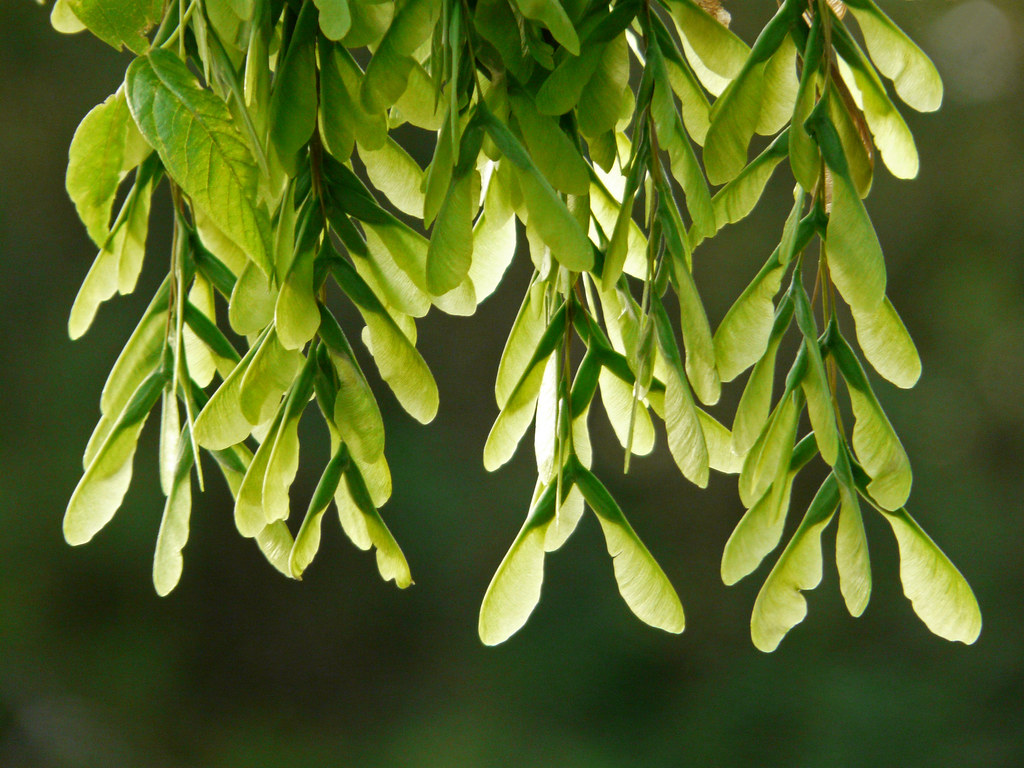
Only the female trees make the "helicopter" fruits common to maples (technically known as samaras, also called keys), and only if there is a male nearby. 
In winter, they're easy to recognize by their chubby, opposite buds; the twigs are fresh looking, green or purple, and covered with a fine fuzz that's easy to rub off.
The wood is abnormally soft for a Maple, and branches tend to break off easily, making this a somewhat scraggly tree.
Range:
The most widespread maple in the world, stretching from Ontario south to Guatemala, with a native range that covers a wide swath of North America.  In many parts of the US, especially eastern states,  it's considered a pesky tree at best; in Australia it's officially considered an invasive species.
What's in a Name?  
Acer means "sharp", in reference to the normally hard wood of maples, which the Romans used for spear shafts.  Negundo is a Sanskrit word referencing the resemblance to Chastetree (Vitex negundo).  The name Boxelder (or Box Elder) comes from the leaves' similarity to Sambucus (Elder) and the white wood's likeness to Boxwood (Buxus sempervirens).  A few sources say it's named for the fact that people make boxes from its soft wood, but I'm not buying it.  
This is also commonly known as Manitoba or Ash-leaf Maple.  In Spanish it's Fresno de Guajuco.   
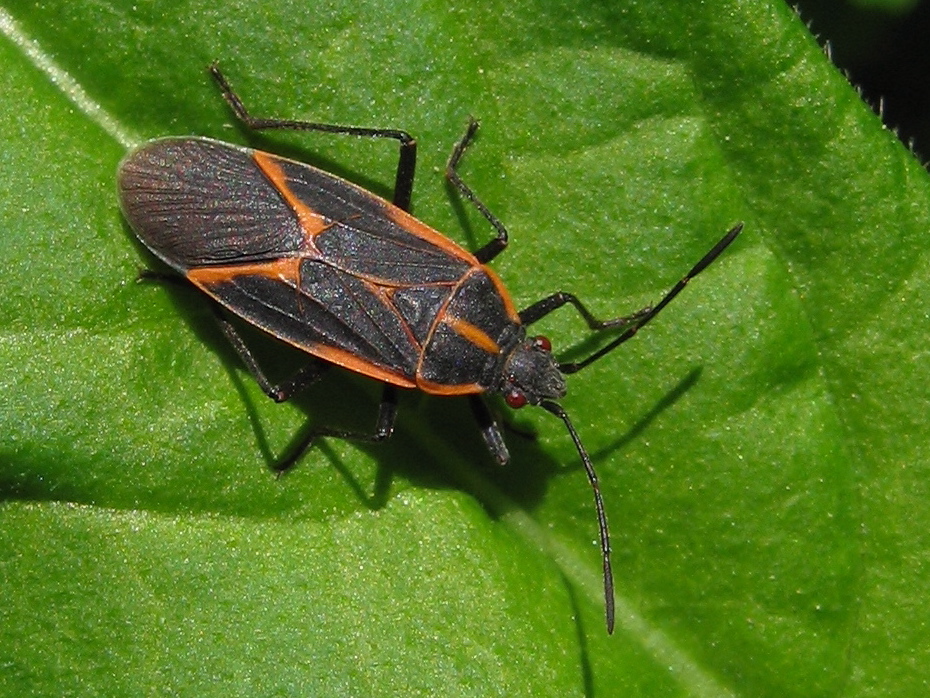
Tidbits:  Acer negundo is most famous for its relationship to the Boxelder bug (Boisea trivitattus).  There are many myths and misconceptions floating around about these little critters, so let's break it down.
1.  Boxelder bugs are found on all kinds of maple and ash trees, but greatly prefer Acer negundo.  Only the female trees are hosts to the bugs.  They feed on low vegetation in spring, lay eggs all over the tree in mid-July, and start to move toward overwintering sites in fall.
2.  These overwintering sites may very well be your warm, cozy house!  Some buildings are more susceptible to the invasion- namely, the sunniest ones (tall, good southern exposure).  Adults can travel up to two miles in search of a winter home, so chopping down the Boxelder tree in the front yard might not save you (although it may help).
3.  They don't bite.
4.  They don't cause any noticeable injury to their host trees.
5.  It's highly unlikely they'll gobble up your house plants.
6.  They might leave streaks of poo on your walls and curtains.  This is probably their greatest fault.
7.  The best defense is offense.  For a great reference on what you can do to seal up your home, see this U-MN Extension publication.
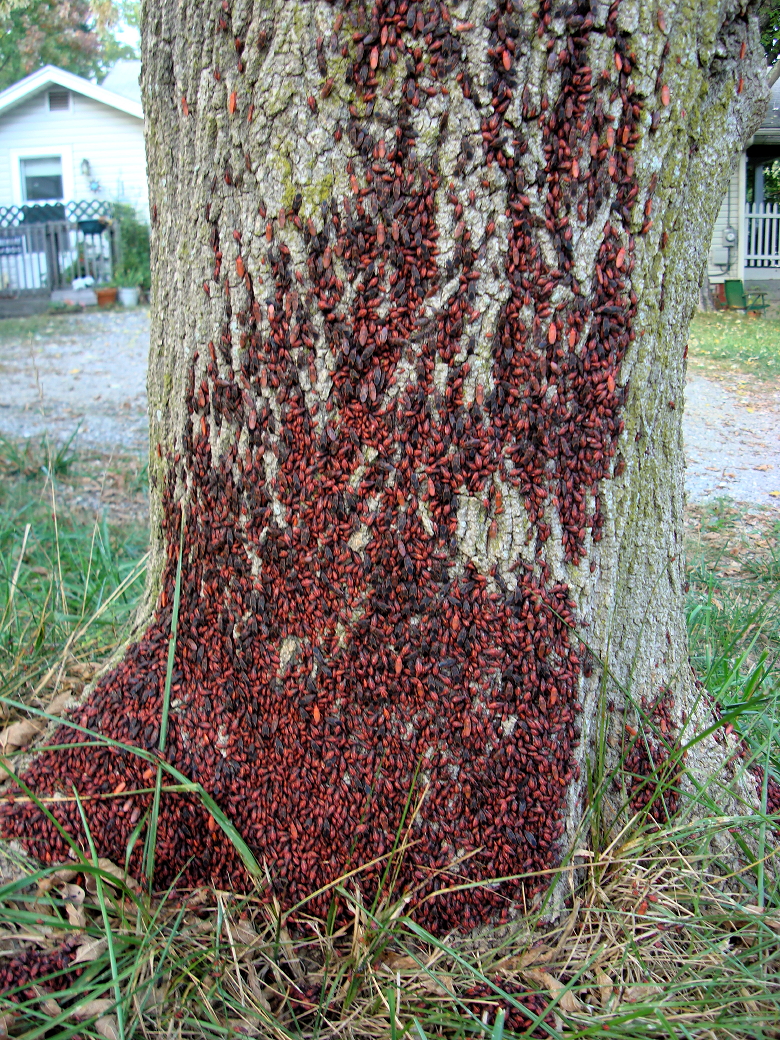
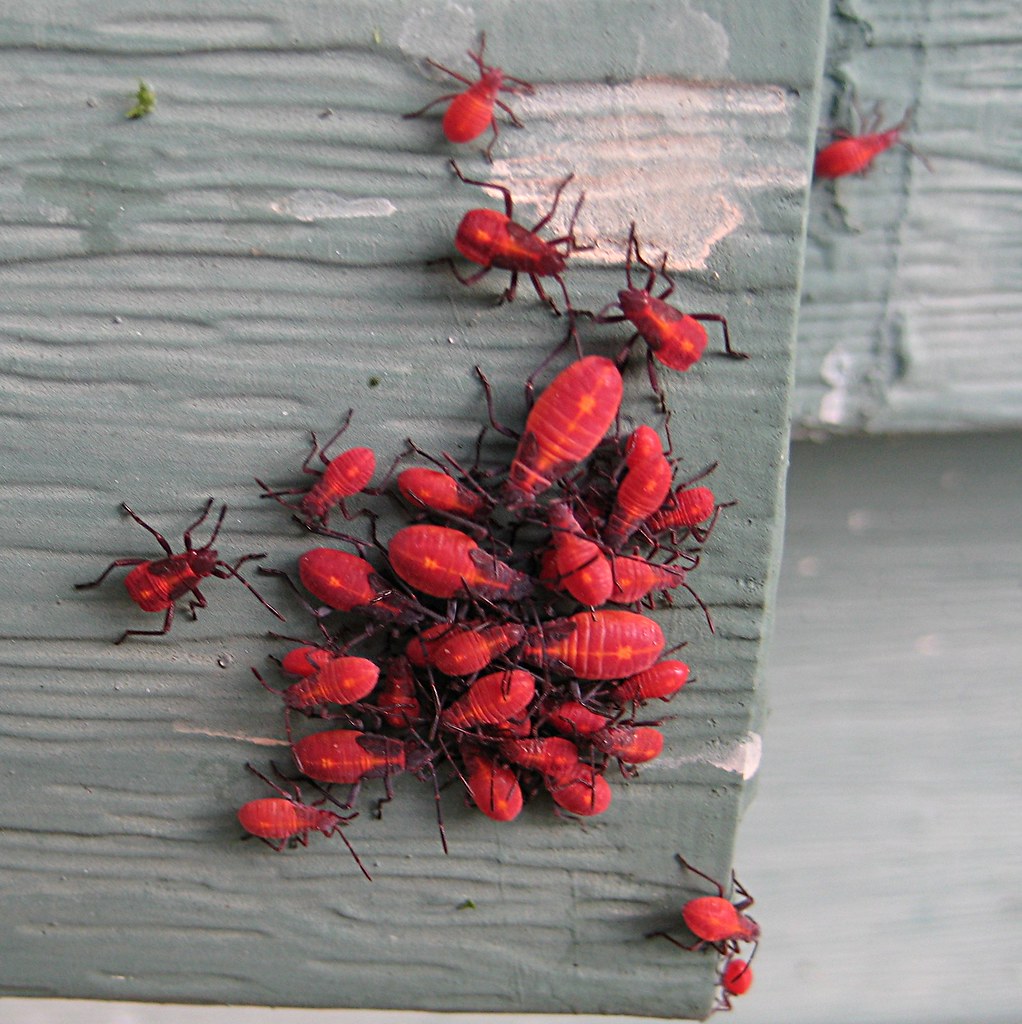
8.  You can find piles of the bright red nymphs throughout the summer.  They're harmless, fascinating insects to observe.
Boxelder is highly sensitive to 2,4-D (a common herbicide), and is susceptible to fire and mechanical damage due to its thin bark.
The wood is used for fiberboard, cheap furniture, pulp and fuel.  You can tap these trees in spring to produce maple syrup.
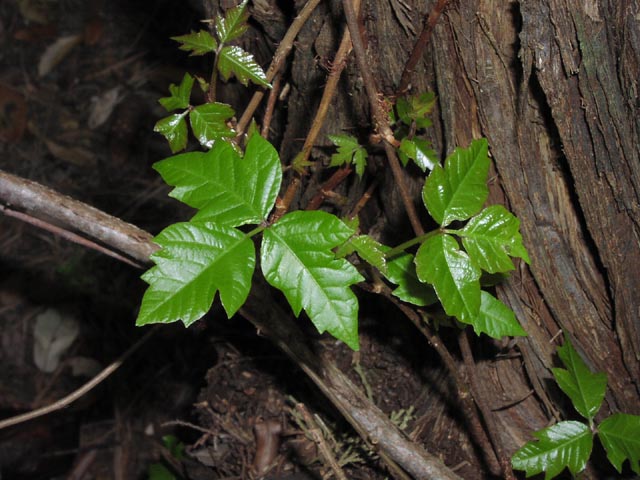
Seedlings and young saplings look a lot like Poison Ivy (Toxicodendron radicans).  The top photo here is a boxelder.  Notice the bottom poison ivy has really shiny leaves.  Not a perfect identifying feature, but a decent starting point.


Wild gardening:
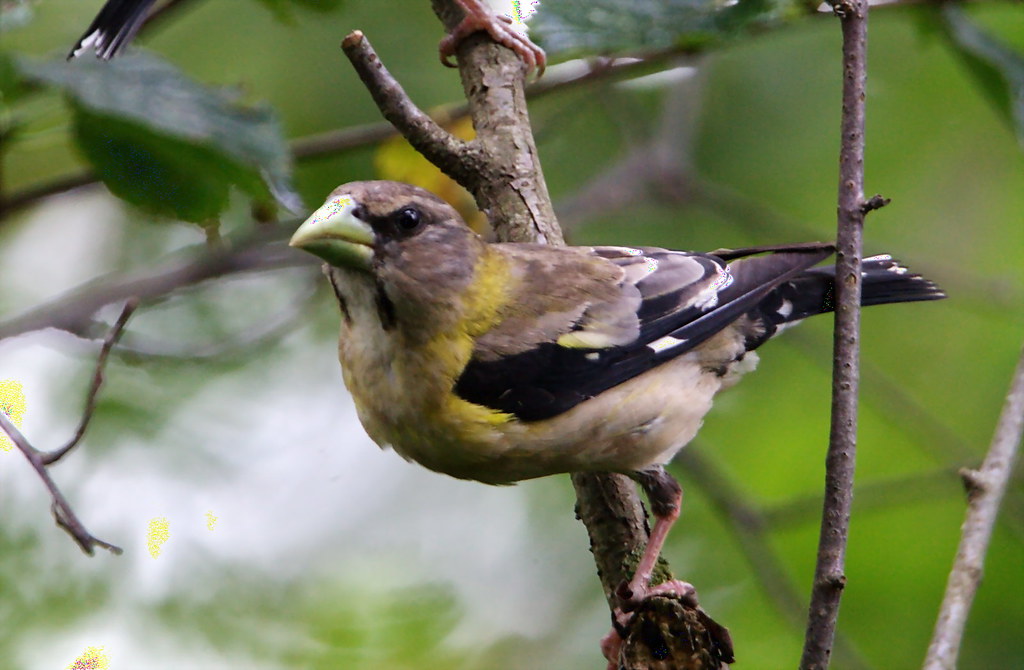
This is a fast growing, short-lived tree (avg. 60 yrs) that's hardy to Zone 2 and highly drought tolerant.  With it's prolific seeds and ready establishment, it has a tendency to become weedy or invasive.  It also suckers like crazy where branches have been cut or broken.  Maybe not the best choice for a tidy lawn, but fine for naturalized areas in the west.  In fact, it provides essential habitat factors for backyard wildlife.  Besides Boxelder bugs, it's a larval host to Cecropia Silkmoths (Hyalophora cecropia-mostly found in the east).  It's wind-pollinated but also visited by bees.  Squirrels and many birds, particularly the Evening Grosbeak (Coccothraustus vespertinus), feed on the seeds.


May 5, 2013

Resources for the Wild Beekeeper

So...I'm not coming up with any new content in this post, I know.  But I've found myself in a little bit of a...situation...lately...
"Yawwwn...bedtime, hooray!  I'll just buzz through my Facebook feed real qui--hey lookie!  A neat little article about bee lifespans by Crown Bees!  Click click, oop, what's this?  An insect hotel photo gallery from all over the world?  Sweet sweet swee-oh my gosh I've been looking for some research on the evolution of bees and wasps!  Yesssss...click click click. Fascinating.  That reminds me, I need to find good instructions on insect collection techniques...and where to buy pins and...click click click..."
Boom.  It's three in the morning, I'm wide awake with 15 browser windows open, and up to my ears in totally awesome resources for someone who can't get enough of native bees and other busy little pollinators.  Too much information and you just get lost down the rabbit hole.
So I've been wanting to pull together a compendium of sorts; a handy dandy list of what I've found to be the most complete, compelling, entertaining and useful tools available to all us budding apiologists.  These are the movers and shakers in the world of bees, with a special focus on western Montana's native species.  If you think of any I've left out, just give me a hoot!

*One quick note.  Sometimes it seems there's a savage war raging between the "native bee" people and the"honeybee" people.  I'm not going to get into honeybees much at all with this resource guide.  No time, no space!  But I highly encourage you to read this intriguing article on how native bees and honeybees interact and compliment each other's work.  I can't stop talking about it.


Helpful Organizations, Projects and Tools for the Wild Beekeepers of Western Montana

What IS that?!  Identification and Classification Tools
Insect identification can drive you bonkers!  I remember my first entomology class all too well.  The textbooks seemed to be written in a different language.  SO much new terminology, so many nit-picky little parts to learn, sooooo many insects species in the world!  We have thousands of native bee species in North America, and if you want to know which ones are buzzing around your garden, you have to learn to key them out.  This guide to bee families is a good place to start.  It gets easier, once you get the lingo down.  I promise.  For a refreshing, colorful, very readable guide to a few of Montana's poster-child bees, check out MT Bee ID.  This MSU extension guide gets a little more in depth, still specific to Montana.  For an all-around excellent insect ID tool, check out Bug Guide.  And if you really want to get into it, Discover Life lets you key out pretty much any living thing on earth using simple Q&As and lots of pictures.  Also check out Nico's photos...he's based in Belgium, but the photo sets are well put together and very helpful.

Burrowing in a little deeper...
Pete Hillman did a nice readable overview of the biology of bees-a perfect intro to what bees are all about.
Some of the best collaborative research and outreach in the country is being done at the University of MN Bee Lab--which is nice, because the majority of resources you find on native bees are coming out of western Europe (BWARS is worth peeking at, as is Hymettus.  Both excellent programs from the UK, with plenty of applicable info for the US.)
My favorite source of casual info on North American native bees is Our Native Bees.  This is the site that keeps me up till dawn.  It's filled with endlessly fascinating articles, tidbits and photos that I just can't get enough of.  You can buy bee supplies here, and learn so much about wild beekeeping, and...you'll love it.

Inspiration
You can spend countless hours toodling around on the computer, soaking up wild bee facts like a sponge, but eventually you're gonna wanna DO something!  You could build a simple nesting box--Montana Wildlife Gardener put together some handy instructions.  If you want to take on a slightly bigger project, visit my tutorial on building Pollinator Hotel installations in your garden.
Once you've got your habitat set up, you can Map Your Nest!  I really believe that citizen science projects like this are the key to building engaged communities and cultivating the collective knowledge base we need to save the world.  Just sayin'.
To see citizen science in action, check out the Yatton Area Bee Project--a collaborative, community-based approach to protecting local bee populations.  Models like these are totally applicable to any city or town...even yours!  Dooooo it...
I also love Resonating Bodies, which celebrates pollinator biodiversity through media installations and community outreach projects.  Very inclusive, very cool.

Pollinators in the Garden
The Pollinator Garden is great.  My particular brand of geekery has led me to become pretty well versed in the topic of gardening for wildlife and sustainability, and I still managed to learn a whole lot from this UK-based site.  Good pleasure reading, if you're anything like me.
If you're planning a pollinator garden, use this Pollinator Syndromes chart.  It tells you what types of flowers attract what types of pollinators, basically, and is super handy.  It's buried in the depths of the Pollinator Partnership, which, along with The Xerces Society, is without a doubt the go-to for everything you ever wanted to know about insects and pollinator conservation.
Be sure to check out the LA Times' take on why you need to get in on backyard wildlife habitat conservation...featuring Flora montana's Wild House of Bees!
I put together a nice compilation of wildlife gardening and native plant resources specific to western Montana, as well.  Here you go.  Visit the Wild House of Bees Frequently Asked Questions page to dig deeper.
Still need more?  Beautiful Wildlife Garden put together an Ultimate Guide to Attracting Native Bees that will definitely keep you busy.  Click click click...

Fuller's Teasel

Fuller's Teasel
Dipsacus fullonum
Dipsacaceae (Teasel Family)


Quick ID
Prickly thistle-like plants that are generally about five feet tall, although I've seen plenty reach the ten foot mark.  They're biennials, forming a rosette of leaves the first year and flowering the second season.  Flowers are light purple little tubes tucked into a spiny seedhead that perches atop the bristly stem like a pinecone.
Range
Fuller's teasel is native to Europe, and was first cultivated in the US in the 1800s.  It naturalized quickly and is now found growing wild all over the country, except in the northern Great Plains and some states in the southeast.  Look for big patches in moist areas by roadsides and other places where the soil has been disturbed.

What's in a Name?
The genus Dipsacus comes from the Greek "dipsa," meaning thirst.  This is in reference to the leaves, which close around the stem to make a little cup where water collects. Studies have shown that the more insects that land in these cups, the more seeds a teasel plant will form, which implies that Dipsacus is at least partially carnivorous.  Rawrrr!
The species name is fullonum, pertaining to fullers (people who cleanse and process wool into cloth).  Traditionally, dried heads of teasel were used for this purpose, attached to spindles and "teased" through wool to clean out dirt and raise the nap of the fabric.
Nowadays the industry uses wool cards (which look like a brush for a kitty), but some purists use the pointy, hooked seed heads still today.  Apparently, when there's a lot of resistance in the fabric, the easily-replaced teasel head just breaks, whereas metal cards will rip the cloth.
Tidbits
The stems of teasel are hollow, making them perfect for building a Wild House of Bees!  In spring, solitary cavity-nesting bees will fill these tubes with a row of eggs, which will hatch and pupate over the summer.  The young bees spend the winter in the stems, and emerge in spring to begin the process anew.  They survive by feeding on a little pollen reserve (or in the case of wasps, a meaty little insect body) left by the mother in the nest cells.  Did you know that insects in the order Hymenoptera (bees, wasps and ants) are the only insects in the world that provide food for their offspring?  Awesome.  
Wild Gardening
By most accounts, you probably shouldn't grow teasel in the garden.  It's at least some level of noxious weed in Colorado, Iowa, Missouri and New Mexico, and has invasive tendencies wherever it gets established.  That said, the spiny seed heads are awfully pretty, and especially nice for dried flower arrangements.  But remember that human dispersal is the number one way teasel seeds are spread, and once it gets out into the environment, it can quickly crowd out native plants.  Using dried seed heads in floral arrangements that are going to leave your house is probably not a good idea.  Better idea--find a wild patch, pull up the stalks, trash the seed heads, and use the stems to build little native pollinator habitats.  Everybody wins!